
MIDA ENGINEERING & SERVICES PRIVATE LIMITED has been established to provide, reliable and competitive storm water works solutions with the banking of experienced management. we have all elements technology, systems, people, and finance to become a leading service provider in the region.
Retention Basin
Storm Water Recharge wells
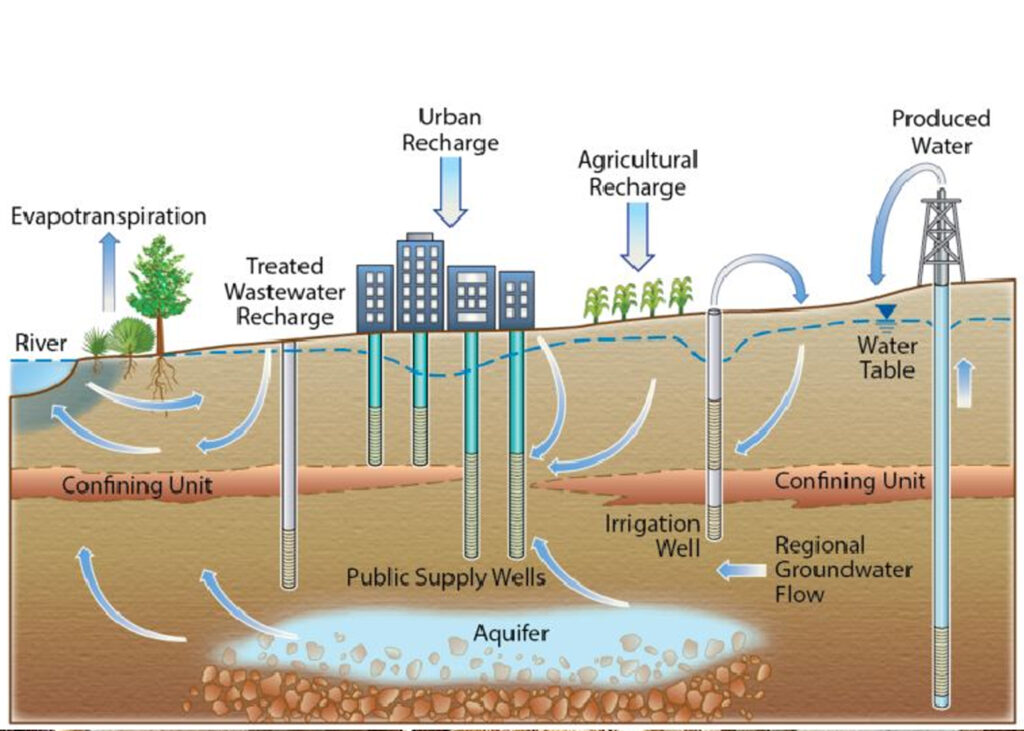
This is important because they help to preserve natural groundwater supplies. Groundwater is a critical resource for many communities, providing drinking water and supporting agriculture and industry. However, groundwater levels can decline over time due to overuse or drought. Water recharge wells help to replenish these supplies, ensuring that they remain available for future generations. The rainwater will be harvested from roof and surface/ lawns which will be connected to groundwater recharge system namely recharge well.
Recharge/Invert well shall be installed by rig or hand percussion bore. PVC pipe of 6 inches dia shall be lowered up to the depth about 10 feet below water table depth. About 50 – 60 ft PVC filter will be lowered below blind pipe to provide sufficient trans missive column for lateral flow of inverted water. Pre-filtration system shall be provided to eject the solid particles before flow into the bore. The storm water received from rooftops, lawn, roads etc; will be collected in a silt-trapping box to de-load heavy particles. Later-on roughing and fine filter boxes has been provided to eject turbidity before entering the well. Otherwise, entry of water into bore without removal of silt load may chock the system in the shorter period thus minimizing service life of the recharge system. Cumulative water meter (volume basis) shall be installed to monitor the volume of water flow into the well. Piezometers would be installed in the surrounding area to monitor the effect on water table.
Monitoring of Hydro Salinity Behavior:
Two observation wells 5 and 50 ft apart from invert wells will be installed to monitor the impact of recharge well on water table depth. Water samples shall be collected from storm water and different filtration steps to monitor the efficacy of filters. Water samples shall be collected from observation wells also to assess the impact of recharge on water quality.